

Tuesday, September 1
Shadow

Author: admin

AI Breakthroughs Could Dramatically Reduce Data Center Energy Consumption, Says Temasek

AI Breakthroughs Could Dramatically Reduce Data Center Energy Consumption, Says Temasek

news
Artificial intelligence continues to transform industries worldwide, but one of its biggest challenges has been its enormous energy demand. Today, new insights from global investment company Temasek suggest that upcoming AI innovations could significantly reduce electricity consumption, making AI development more sustainable in the coming years. As AI adoption accelerates across cloud computing, enterprise software, and scientific research, reducing energy usage has become a top priority for governments, technology companies, and infrastructure providers. Why AI Energy Consumption Has Become a Global Concern Large language models and advanced AI systems require massive computing resources. Training and running these models often involve thousands of high-performance GPUs operating con...
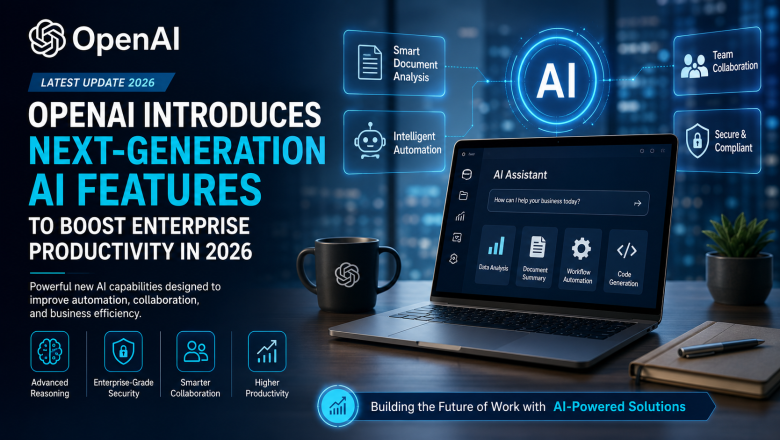
OpenAI Introduces Next-Generation AI Features to Boost Enterprise Productivity in 2026

OpenAI Introduces Next-Generation AI Features to Boost Enterprise Productivity in 2026

news
Artificial intelligence continues to reshape the global technology landscape, and OpenAI has announced a new wave of enterprise-focused AI capabilities aimed at helping organizations improve efficiency, automate repetitive tasks, and enhance workplace collaboration. The latest updates focus on making AI assistants more capable of handling complex business workflows while maintaining strong security, privacy, and compliance standards. Industry analysts believe these improvements represent another major step toward widespread enterprise AI adoption. OpenAI Expands AI Capabilities for Businesses OpenAI's newest platform enhancements include more advanced reasoning abilities, improved document analysis, expanded coding assistance, and better collaboration features for enterprise teams. Org...
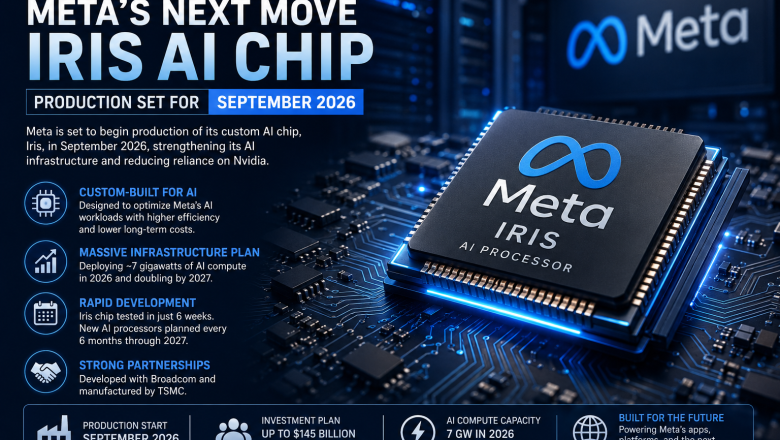
Meta Accelerates AI Strategy with Custom Iris Chip Production Set for September 2026

Meta Accelerates AI Strategy with Custom Iris Chip Production Set for September 2026

news
Meta is taking another major step in the artificial intelligence race by preparing to begin production of its first next-generation in-house AI chip, Iris, in September 2026. The move signals the company's growing ambition to reduce reliance on third-party hardware suppliers while expanding its massive AI infrastructure across products including Facebook, Instagram, WhatsApp, and its AI assistant ecosystem. The announcement comes as technology giants continue investing billions of dollars in custom silicon to gain greater control over AI performance, costs, and scalability. Why Meta Is Building Its Own AI Chips Meta has traditionally relied on graphics processors from Nvidia and AMD to train and run large AI models. However, soaring demand for AI hardware and supply chain constraints ...
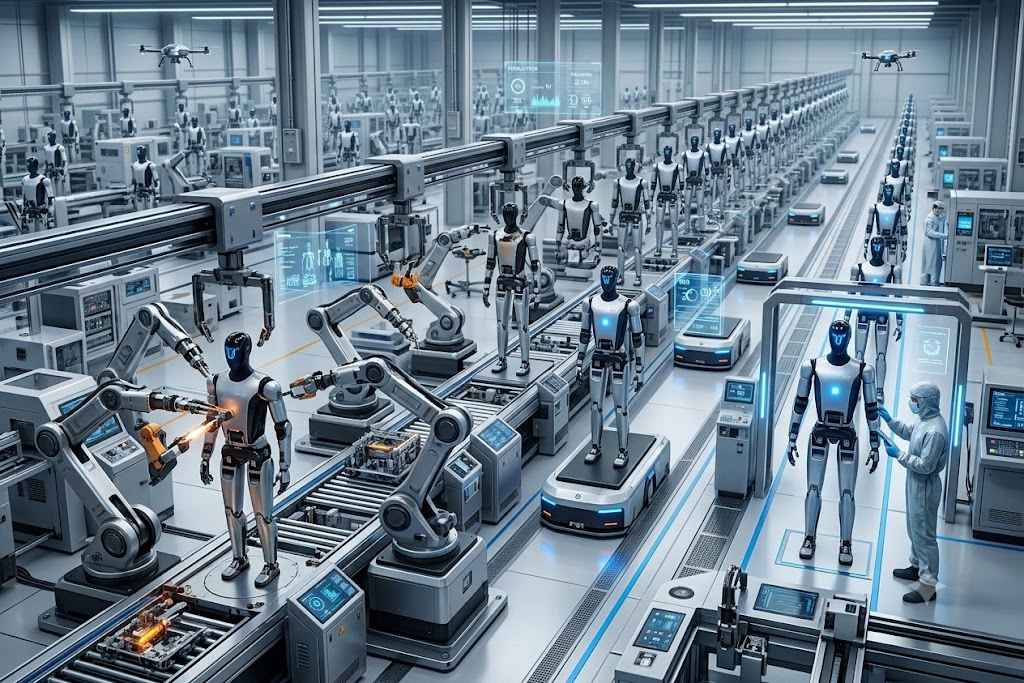
Rise of the Synthetics: Inside China’s Race to Mass-Produce Humanoid Robots

Rise of the Synthetics: Inside China’s Race to Mass-Produce Humanoid Robots

news
The global race for automation has entered a sci-fi reality. Walking through advanced manufacturing hubs in China today, you are no longer just seeing robotic arms welding car parts; you are witnessing the birth of mass-produced humanoid robots. Driven by ambitious government mandates and breakthroughs in artificial intelligence, China is aggressively positioning itself to become the undisputed global factory for human-like machines. By scaling up production lines, these robots are rapidly moving from tech lab curiosities to active workers on factory floors and commercial spaces. 1. The Blueprint: Beijing's Ambitious Mandate China’s sudden acceleration into humanoid robotics isn't an accident—it is a highly coordinated state strategy. The Ministry of Industry and Information Technolog...